PRP for Hair Loss: Does it Really Work?
Exploring the science behind autologous Platelet-Rich Plasma (PRP) therapy and why high-yield concentration is critical for follicle reversal.

Dermatologist · Board Certified
The Biology of Autologous Platelet Activation
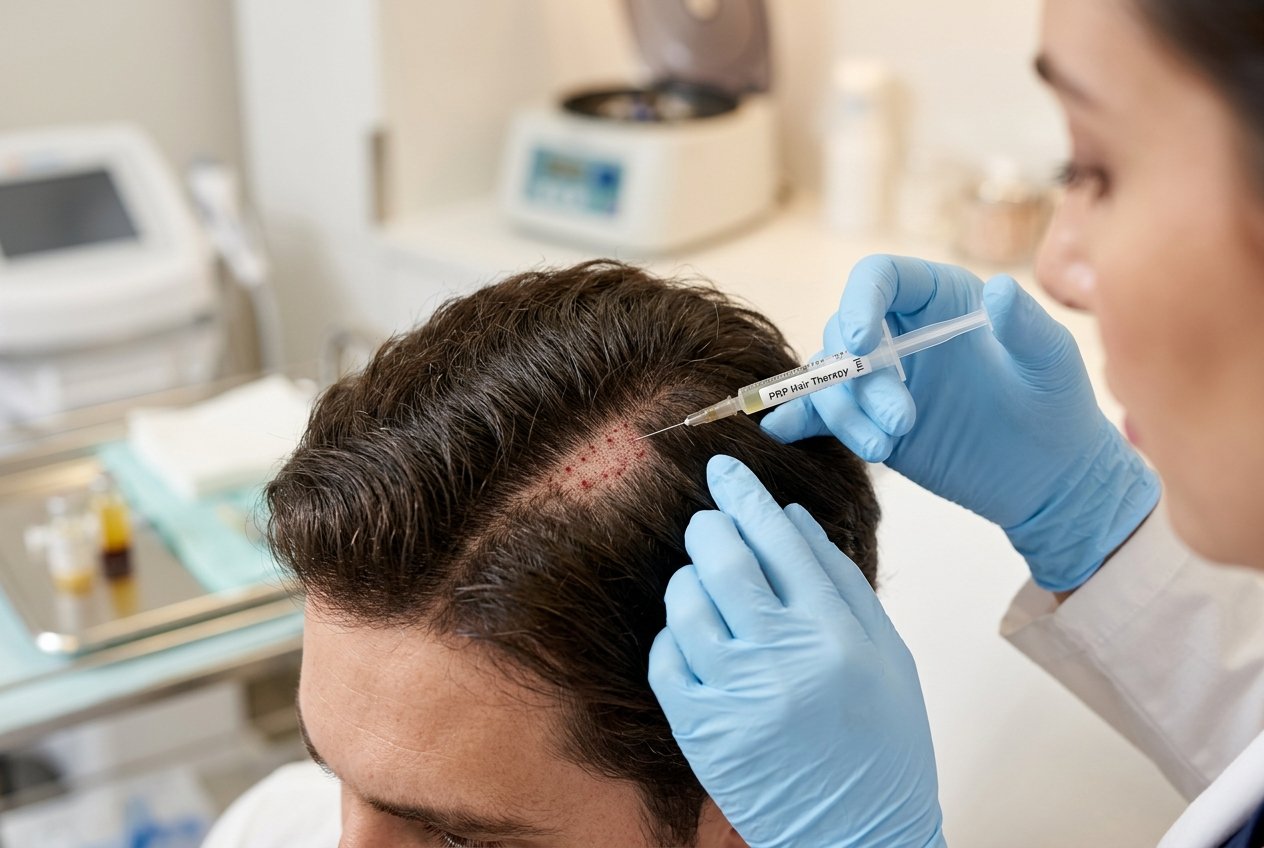
Platelet-Rich Plasma (PRP) therapy harnesses your own blood’s natural regenerative signaling molecules to awaken miniaturizing hair follicles. A small blood sample is collected and processed through double-spin centrifugation to isolate concentrated platelets.
Once injected around dormant hair bulbs, activated platelets degranulate, releasing high concentrations of PDGF (Platelet-Derived Growth Factor), VEGF (Vascular Endothelial Growth Factor), and TGF-beta, which stimulate angiogenesis and prolong the anagen (growth) phase of the hair cycle.
Why Yield & Concentration Matter
Not all PRP treatments are created equal. Clinical efficacy relies heavily on achieving a therapeutic threshold of 4x to 6x baseline platelet concentration.
SolSkin utilizes sterile, gel-separator closed centrifugation kits alongside Growth Factor Concentrate (GFC) protocols, preventing red blood cell contamination and maximizing growth factor viability with minimal discomfort.
Expected Timeline & Maintenance
Hair shedding decreases significantly within the first 4 to 6 weeks. Noticeable density improvements and hair shaft thickening are typically evaluated at month 3 to 4 across a standardized series of 4 monthly sessions.
PRP serves as an exceptional standalone therapy for early-stage androgenetic alopecia and telogen effluvium, or as an adjunct protocol following FUE hair transplants.
Clinical Takeaway from Dr. Shruti
Every patient’s skin architecture, cellular barrier resilience, and melanin threshold are unique. Never start high-potency chemical actives or energy devices without a professional clinical assessment.
Explore our Hair PRP & GFC Therapy protocol →